


Bedroom Lighting


Bedroomlighting
Bedroom lighting ideas and design advice from our lighting designers, from warm, sleep-friendly light to bedside reading lights and wardrobes.
Light thathelps you rest
A bedroom is lit for the start and end of the day. Clear light for getting dressed in the morning, and warm, low light that helps you wind down at night.
That means keeping bright light away from the bed, putting reading light exactly where you need it, and choosing warm colour temperatures that feel restful. Being able to switch everything off from the bed makes all the difference.
A good bedroom lighting plan also takes care of the practical: lit wardrobes, a gentle night light and switching at both the door and the bedside.
Three layersof light
Soft overall light, focused reading light and a little decoration.

Ambientlight
A ceiling light, chandelier or a few downlights for general light. Keep them away from directly over the bed, where they shine in your eyes when you lie down.

Tasklight
Reading lights either side of the bed, light at a dressing table and lighting inside wardrobes, where you need to see colours clearly.

Accentlight
LED behind a headboard, along a curtain pelmet or under the bed. Soft and indirect, it is the light you leave on as you fall asleep.
Warm lightfor sleep
Colour temperature, measured in kelvin, has more effect on how a bedroom feels than any fitting. The lower the number, the warmer and more relaxing the light.
Slide through the range to see how the light changes, and when each one suits a bedroom.

An illustration of the change in warmth, not an exact match. See the difference for real in one of our showrooms.
Bedsidelighting
Bedside lights are the most-used lights in a bedroom. The right height and a switch you can reach from the pillow make them a pleasure to use.
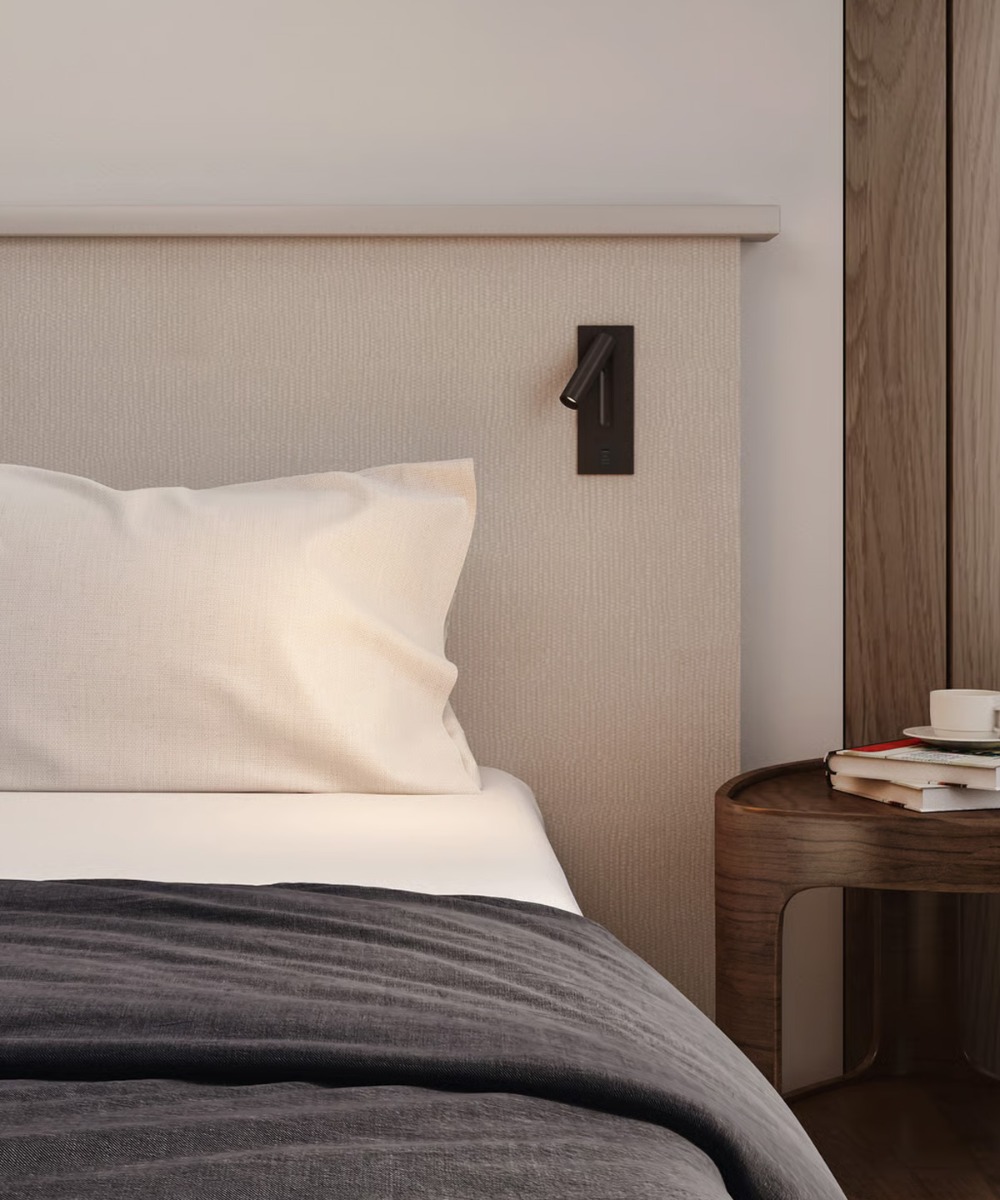
Readinglights
If you read in bed, a dedicated reading light is worth more than any other fitting in the room. It lights the page without lighting your partner.

Wardrobes anddressing areas
Choosing clothes in a dark wardrobe is no fun. Light inside the wardrobe and at a dressing table helps you see colours as they really are.
Dimming andcontrol
Small details that make a bedroom easier to live in.
Bedroomlighting FAQs
Can't see your question? Call us on 0208 342 7009 or visit a showroom.
Warm white, around 2700K, suits most bedrooms. For bedside and evening light, 2200K to 2700K feels especially restful. Cooler light above 3500K is best kept for wardrobes or a dressing table, where you need to see colours accurately.


Plan yourbedroom
Send us your plans or bring them to a showroom. We will create a lighting plan with every fitting, circuit and switch marked, ready for your electrician, and help you choose the lights.